

Unlocking The Next Phase of Remote Operations
Fourphase starts an industry first remote operation pilot in the North Sea
Remote operations are emerging as a key enabler of improved safety, lower environmental impact and cost reduction in the energy industry. FourPhase has been developing its solids management technology in preparation for this transition since 2018. Step by step, FourPhase is progressing towards a remote-first approach without compromising on safety or performance.
Now, with the industry’s first remote operations pilot in the North Sea, FourPhase is taking another critical step towards enabling fully remote operations for sand and solids handling.
Remote operations are emerging as a key enabler of improved safety, lower environmental impact and cost reduction in the energy industry. FourPhase has been developing its solids management technology in preparation for this transition since 2018. Step by step, FourPhase is progressing towards a remote-first approach without compromising on safety or performance.
Now, with the industry’s first remote operations pilot in the North Sea, FourPhase is taking another critical step towards enabling fully remote operations for sand and solids handling.
A new phase for solids management
The industry first, two-month long pilot, led by Project Manager Magnus Hanevik, focuses on an intervention campaign involving stimulation and coiled tubing cleanout of two wells and marks a significant milestone in operational innovation.
This development builds on a strong foundation of innovation in both equipment and new technologies. It started in 2018, when FourPhase completed the first-ever autonomus bulk desander for a NUI in the South China sea. Followed by a project in 2022 utilizing a DualFlow system was installed on a Normally Unmanned Installation (NUI) in the UK North Sea, monitored from a nearby platform as well as from shore without a permanent offshore crew.
Now, FourPhase has progressed from remote monitoring to remote operations, the first of its kind in the industry. It’s a significant leap towards full remote capability. The core objective is to shift the control container from offshore to an onshore facility, reducing the need for an offshore presence while maintaining full operational oversight.
This development builds on a strong foundation of innovation in both equipment and new technologies. It started in 2018, when FourPhase completed the first-ever autonomus bulk desander for a NUI in the South China sea. Followed by a project in 2022 utilizing a DualFlow system was installed on a Normally Unmanned Installation (NUI) in the UK North Sea, monitored from a nearby platform as well as from shore without a permanent offshore crew.
Now, FourPhase has progressed from remote monitoring to remote operations, the first of its kind in the industry. It’s a significant leap towards full remote capability. The core objective is to shift the control container from offshore to an onshore facility, reducing the need for an offshore presence while maintaining full operational oversight.
Designed for safety, performance and efficiency
The benefits of remote operations are clear. For operators, they translate into reduced People on Board (POB), lower logistics costs, a smaller environmental footprint, and most importantly, safety isn’t compromised. For personnel, it means improved working conditions, fewer offshore deployments and significantly reduced exposure to potentially harmful situations and materials.
In this pilot, the control centre is being relocated onshore, allowing live monitoring and system operation from the customer’s control center . This shift immediately removes personnel from the hazardous offshore environment, delivering a tangible improvement in health and safety performance.
Initially, the operation will run with four offshore personnel—two per shift—to ensure resilience while testing all remote and autonomous functions in real-time. The team will then reduce to one person per shift, with the longer-term goal of fully autonomous operations.
As CTO Jørgen Bruntveit puts it: “Always build a secure foundation before you raise the roof.” This philosophy underpins the deliberate, quality-focused progression of FourPhase’s remote operations strategy.
In this pilot, the control centre is being relocated onshore, allowing live monitoring and system operation from the customer’s control center . This shift immediately removes personnel from the hazardous offshore environment, delivering a tangible improvement in health and safety performance.
Initially, the operation will run with four offshore personnel—two per shift—to ensure resilience while testing all remote and autonomous functions in real-time. The team will then reduce to one person per shift, with the longer-term goal of fully autonomous operations.
As CTO Jørgen Bruntveit puts it: “Always build a secure foundation before you raise the roof.” This philosophy underpins the deliberate, quality-focused progression of FourPhase’s remote operations strategy.
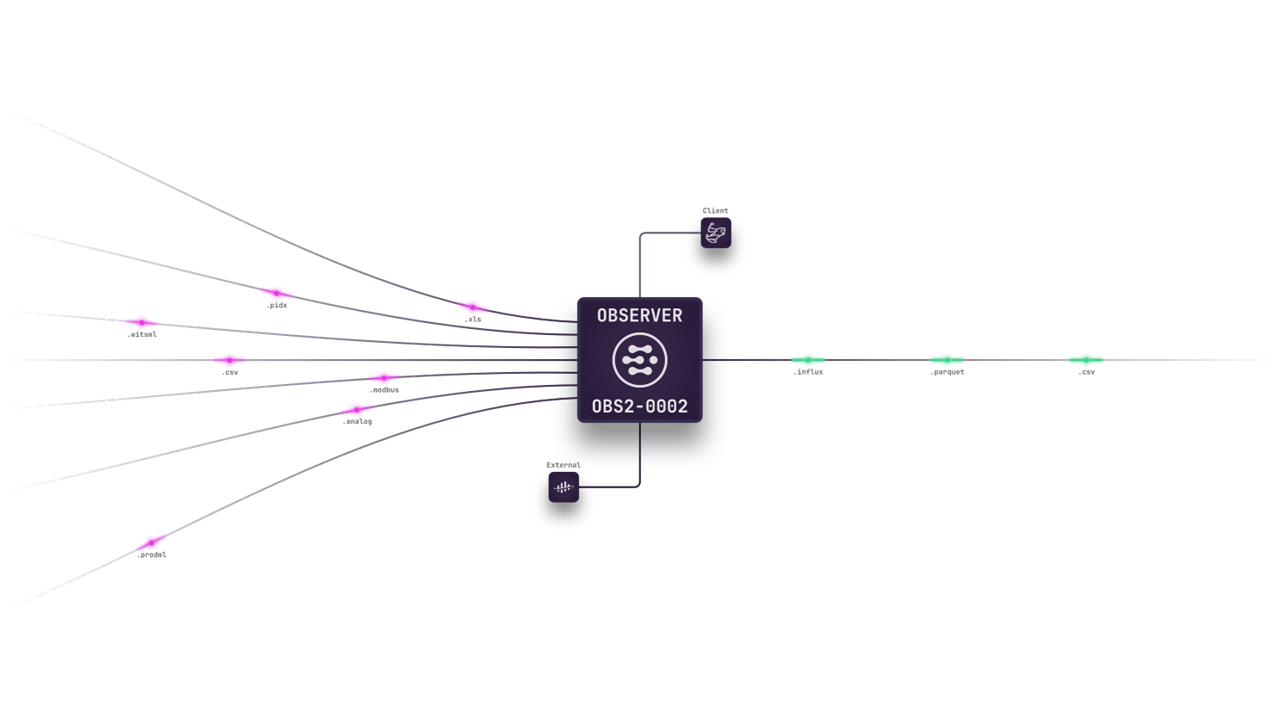
Enabling remote communication
Communication is a central focus of the current pilot. Using the Observer platform, operations are being run directly from the operator’s control room onshore. Compliant with ISO 27001, 27017, and 27701 standards, it ensures a secure connection between offshore and onshore operations via Ethernet, Wi-Fi, Starlink or similar technologies. This fortified security framework not only protects sensitive data but also sets the blueprint for fully remote and unmanned operations.
Importantly, while offshore staff are still present during this initial pilot phase, the deployment is designed to simulate and stress-test fully remote operations. It is a crucial step that allows us to learn, adapt and refine our communication systems under real-world conditions. This allows FourPhase to validate the interaction between technology and personnel, ensuring all autonomous functions aid users in secure, effective and intuitive ways.
Importantly, while offshore staff are still present during this initial pilot phase, the deployment is designed to simulate and stress-test fully remote operations. It is a crucial step that allows us to learn, adapt and refine our communication systems under real-world conditions. This allows FourPhase to validate the interaction between technology and personnel, ensuring all autonomous functions aid users in secure, effective and intuitive ways.
Remote is not new - it’s evolving
Although this pilot marks our first full-scale remote operation, FourPhase has been laying the groundwork for remote capabilities since 2018. From the very beginning, we understood the importance of selecting high-quality equipment and designing systems that could evolve with industry demands. Our roadmap reflects this commitment:
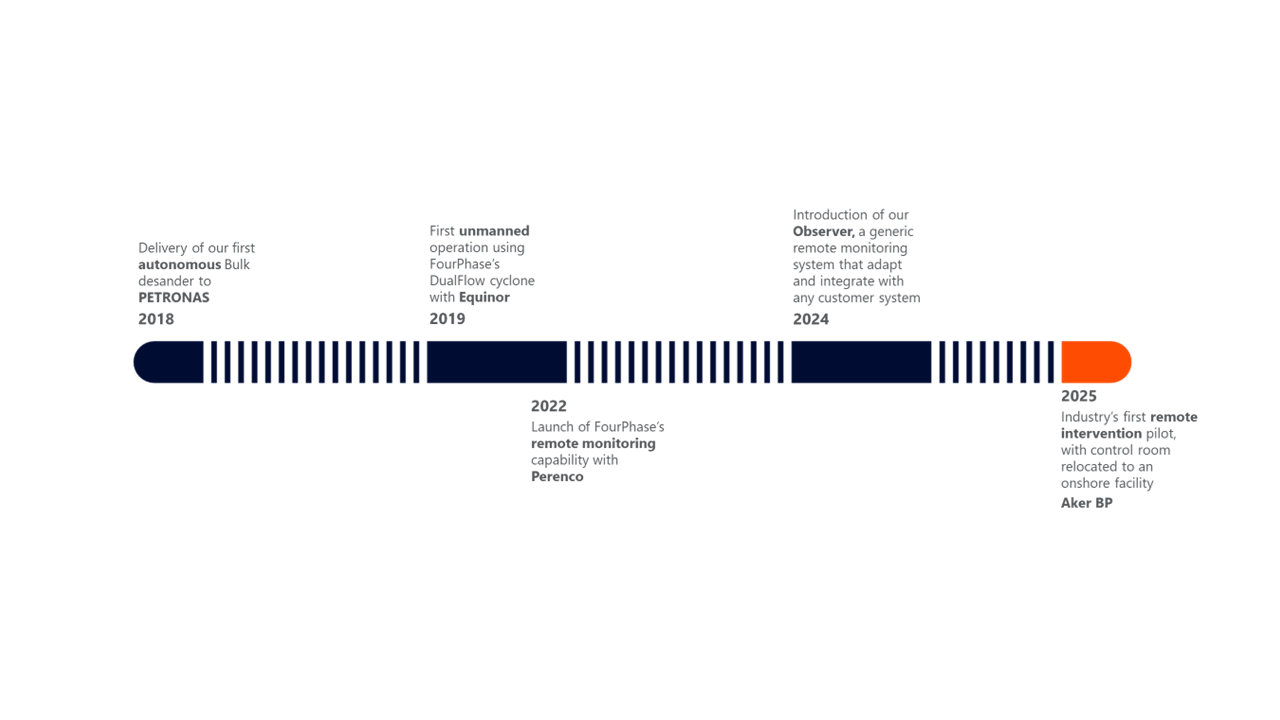
Each step has contributed to building a robust, future-ready approach to solids management.
In addition, FourPhase is developing a suite of bespoke visual and audio systems, so it will no longer be fully reliant on the customers’ communication systems. These enable real-time visual and audio feeds from the offshore environment, giving onshore teams the ability to make decisions based on live, verifiable information. Unlike passive monitoring tools, this interactive setup supports proactive intervention where needed, critical for maintaining performance and operational integrity.
In addition, FourPhase is developing a suite of bespoke visual and audio systems, so it will no longer be fully reliant on the customers’ communication systems. These enable real-time visual and audio feeds from the offshore environment, giving onshore teams the ability to make decisions based on live, verifiable information. Unlike passive monitoring tools, this interactive setup supports proactive intervention where needed, critical for maintaining performance and operational integrity.
The future is remote
As the industry moves towards autonomous rigs, FourPhase is ensuring that all systems are ready to be monitored and operated remotely. Remote operations will increasingly play a central role in addressing offshore space limitations, improving safety and flexibility.
For this pilot, the focus is not on eliminating POB entirely, but on the reduction of it. Through real operations, FourPhase can continue to gather insight and refine its technology for broader deployment. It is a learning platform that allows for testing of any scenario, gather feedback and make meaningful improvements.
By embedding remote capability into every aspect of the technology stack, FourPhase is positioning itself and its customers for long-term success in an increasingly digital, autonomous industry.
For this pilot, the focus is not on eliminating POB entirely, but on the reduction of it. Through real operations, FourPhase can continue to gather insight and refine its technology for broader deployment. It is a learning platform that allows for testing of any scenario, gather feedback and make meaningful improvements.
By embedding remote capability into every aspect of the technology stack, FourPhase is positioning itself and its customers for long-term success in an increasingly digital, autonomous industry.