

Monohull Vessels with FourPhase Desander: An Optimised P&A Solution for Australia’s Growing Backlog of Aging Offshore Wells
Australia’s offshore oil and gas sector is facing increasing pressure to address a growing backlog of legacy subsea wells requiring decommissioning. In parallel, the availability of suitable Mobile Offshore Drilling Units (MODUs) has diminished, while associated operational costs have risen substantially. This has created a clear need for alternative Plug and Abandonment (P&A) approaches that are technically robust, cost-effective, and aligned with regulatory expectations.
A technically viable solution is emerging in the form of monohull vessels outfitted with modular, compact technologies such as the FourPhase DualFlow desander. This configuration enables low-risk P&A campaigns to be executed with greater efficiency, particularly on well types where traditional MODU-based operations are no longer practical or economically justified.
Australia is a strategically important market for FourPhase, and its relevance is increasing as effective solids management becomes a key enabler of safe, efficient and environmentally compliant P&A operations.
A technically viable solution is emerging in the form of monohull vessels outfitted with modular, compact technologies such as the FourPhase DualFlow desander. This configuration enables low-risk P&A campaigns to be executed with greater efficiency, particularly on well types where traditional MODU-based operations are no longer practical or economically justified.
Australia is a strategically important market for FourPhase, and its relevance is increasing as effective solids management becomes a key enabler of safe, efficient and environmentally compliant P&A operations.
What are the Origins of the P&A Bottleneck?
Australia’s offshore P&A challenge stems from an accumulation of legacy wells. The majority of these wells were constructed using older design standards, such as 30” surface conductors with 1” wall thickness, and they are now facing decommissioning. According to the Centre for Offshore Decommissioning Australia (CODA)² , 100 subsea and 32 exploration and appraisal wells are scheduled for abandonment by 2029, with a further 350 anticipated in subsequent years. Many of these wells are not structurally compatible with the large, heavy BOP stacks found on current-generation semi-submersible rigs.
The situation is exacerbated by the significant contraction of the global MODU fleet following the 2014–2018 downturn, during which over 350 rigs were scrapped. Those scrapped include many 3rd and 4th generation floating units which are suited to legacy well operations. Newbuild economics remain prohibitive, leaving operators with limited options:
Option 1 - secure expensive, oversized late-generation rigs
Option 2 - transition to lighter, more adaptable platforms.
The situation is exacerbated by the significant contraction of the global MODU fleet following the 2014–2018 downturn, during which over 350 rigs were scrapped. Those scrapped include many 3rd and 4th generation floating units which are suited to legacy well operations. Newbuild economics remain prohibitive, leaving operators with limited options:
Option 1 - secure expensive, oversized late-generation rigs
Option 2 - transition to lighter, more adaptable platforms.
Monohull Vessels: Do They Provide a Fit-for-Purpose and Operationally Efficient Solution?
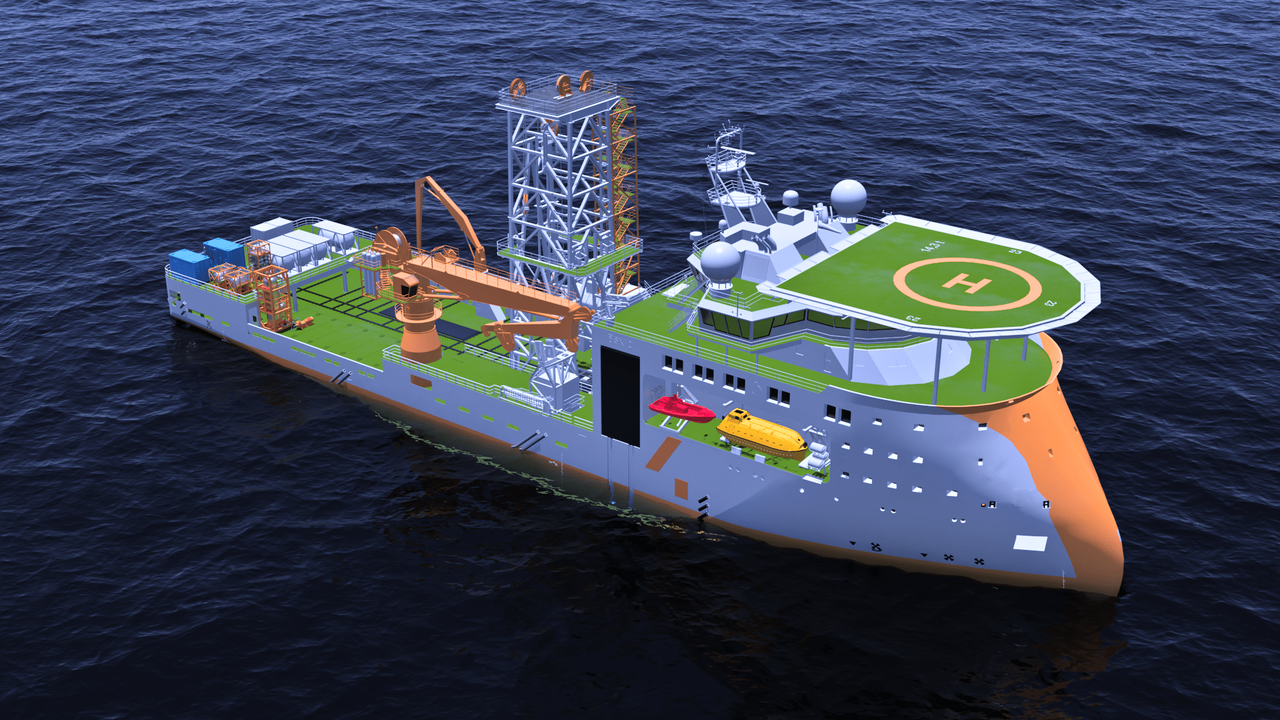
Monohull vessels are already established in well intervention applications, such as coiled tubing. However, now they present a technically feasible and commercially attractive option for targeted P&A work scopes. Key advantages of using a monohull vessel for P&A include:
• Reduced daily spread rates, with cost structures approximately 50% lower than MODU-based operations
• Lower POB (Personnel on Board), decreasing offshore risk exposure and improving HSE metrics
• Greater operational flexibility, particularly in wells with reliable historical data, minimal downhole complexity, and shallow to mid-water depths
Innovative P&A methods, such as Perforate-Wash-Cement (PWC), use of Bismuth and coiled tubing-based interventions decrease overall operational time and reduce reliance on high-capacity riser systems and heavy surface infrastructure. These approaches significantly enhance the technical feasibility of monohull-based campaigns by eliminating the need for full casing milling and pulling operations.
• Reduced daily spread rates, with cost structures approximately 50% lower than MODU-based operations
• Lower POB (Personnel on Board), decreasing offshore risk exposure and improving HSE metrics
• Greater operational flexibility, particularly in wells with reliable historical data, minimal downhole complexity, and shallow to mid-water depths
Innovative P&A methods, such as Perforate-Wash-Cement (PWC), use of Bismuth and coiled tubing-based interventions decrease overall operational time and reduce reliance on high-capacity riser systems and heavy surface infrastructure. These approaches significantly enhance the technical feasibility of monohull-based campaigns by eliminating the need for full casing milling and pulling operations.
Explain the Technical Role of FourPhase Desander Technology in the Process?
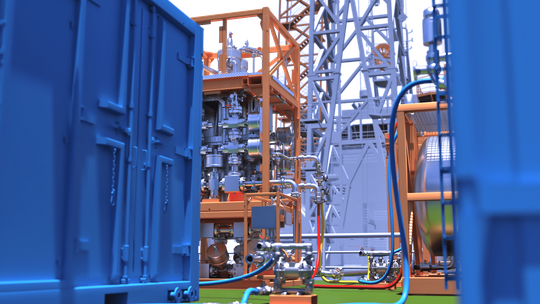
A critical challenge in monohull-based P&A is the effective handling of wellbore returns, particularly solids-laden fluids. While MODUs are equipped with extensive circulation systems and solids control equipment, monohull vessels face limitations in space, power, and processing capacity.
FourPhase addresses this gap with its DualFlow desander. The DualFlow is a compact hydrocyclone-based solution capable of processing up to 20,000 barrels per day (580 US gpm). The system is specifically engineered to operate within the constrained footprint of a monohull vessel while maintaining high throughput and separation efficiency. This makes it ideally suited to coiled tubing-based P&A operations, where flow rates fall well within system capacity.
By managing solids at source and reducing the need for extensive surface processing equipment, the FourPhase desander enhances operational efficiency, supports regulatory compliance, and mitigates environmental risk.
Furthermore, the DualFlow has been configured to operate as part of a closed well returns system. This means that it helps to reduce personnel exposure when handling hazardous material from former production wells such as Naturally Occurring Radioactive Material (NORM), Benzene and similar fluids.
FourPhase addresses this gap with its DualFlow desander. The DualFlow is a compact hydrocyclone-based solution capable of processing up to 20,000 barrels per day (580 US gpm). The system is specifically engineered to operate within the constrained footprint of a monohull vessel while maintaining high throughput and separation efficiency. This makes it ideally suited to coiled tubing-based P&A operations, where flow rates fall well within system capacity.
By managing solids at source and reducing the need for extensive surface processing equipment, the FourPhase desander enhances operational efficiency, supports regulatory compliance, and mitigates environmental risk.
Furthermore, the DualFlow has been configured to operate as part of a closed well returns system. This means that it helps to reduce personnel exposure when handling hazardous material from former production wells such as Naturally Occurring Radioactive Material (NORM), Benzene and similar fluids.
What is the Strategic Application in the Australian Market?
While monohull-based P&A is not universally applicable, it offers a highly efficient solution for a subset of Australia’s well inventory - particularly those with clear downhole records and minimal downhole junk. Applied strategically, this approach can:
• Accelerate decommissioning timelines
• Reduce project expenditure
• Alleviate pressure on limited MODU availability
• Enhance HSE and environmental performance
At a high level, a monohull vessel could plug and abandon around 15 wells per year. This estimate is based on an average of 25 days per well, using the vessel in conjunction with modern, rapid P&A techniques. These techniques significantly streamline the process, enabling faster and more efficient well abandonment operations.
• Accelerate decommissioning timelines
• Reduce project expenditure
• Alleviate pressure on limited MODU availability
• Enhance HSE and environmental performance
At a high level, a monohull vessel could plug and abandon around 15 wells per year. This estimate is based on an average of 25 days per well, using the vessel in conjunction with modern, rapid P&A techniques. These techniques significantly streamline the process, enabling faster and more efficient well abandonment operations.
How Do We Enable Industry Adoption?
Despite the clear technical and commercial advantages, adoption is tempered by established operating preferences. Many operators remain reliant on MODU-based systems due to their versatility and legacy familiarity. However, with intensifying regulatory pressure from agencies such as NOPSEMA (National Offshore Petroleum Safety and Environmental Management Authority), and growing awareness of long-term liabilities, the sector must evolve.
Australia now has an opportunity to pioneer a more agile, technologically advanced decommissioning framework. This can be done by leveraging compact technologies, such as the FourPhase desander, and rethinking traditional rig deployment models. This shift not only addresses immediate P&A challenges but also sets a precedent for more sustainable offshore practices.
NOTES:
2 - https://www.decommissioning.org.au/work/forward-outlook/
Australia now has an opportunity to pioneer a more agile, technologically advanced decommissioning framework. This can be done by leveraging compact technologies, such as the FourPhase desander, and rethinking traditional rig deployment models. This shift not only addresses immediate P&A challenges but also sets a precedent for more sustainable offshore practices.
NOTES:
2 - https://www.decommissioning.org.au/work/forward-outlook/
Get in touch