

Mastering Solids Management in Trinidad and Tobago’s High-Pressure Gas Wells
The offshore fields off Trinidad and Tobago are among the most prolific hydrocarbon producers in the Western Hemisphere. With estimated recoverable gas reserves of more than 10 trillion cubic feet, the region plays a critical role in global exports and regional energy security[1]. However, extracting these resources is far from straightforward.
The region’s offshore gas wells are often high-pressure and high rate, making them particularly vulnerable to the challenges posed by sand and formation debris that enter the flow stream. Left unmanaged, these solids can erode equipment, clog surface facilities, and force operators to shut-in otherwise profitable wells. In an industry where unplanned downtime can cost operators upwards of US$1 million per day[2], the ability to manage solids effectively is not just a technical advantage but a business need.
The region’s offshore gas wells are often high-pressure and high rate, making them particularly vulnerable to the challenges posed by sand and formation debris that enter the flow stream. Left unmanaged, these solids can erode equipment, clog surface facilities, and force operators to shut-in otherwise profitable wells. In an industry where unplanned downtime can cost operators upwards of US$1 million per day[2], the ability to manage solids effectively is not just a technical advantage but a business need.
How Do You Handle the Complex Operating Environment of Trinidad and Tobago?
Wells in Trinidad and Tobago are notoriously complex as production often comes with a high volume of solids that varies dramatically over time. As these solids go through the production system, they can damage wellheads, choke lines, and separators. This can reduce production rates and shorten equipment lifespans.
This is where we’ve carved out a distinct niche. With a proven track record across Trinidad’s offshore assets, FourPhase can deliver innovative solutions that keep production flowing, even under extreme conditions.
Our work with major operators like BP and Shell in the region underscores our ability to operate at the highest technical level. From coiled tubing interventions to production optimisation and well cleanouts, FourPhase has supported some of the region’s most complex projects, while ensuring safety, efficiency, and equipment integrity.
This is where we’ve carved out a distinct niche. With a proven track record across Trinidad’s offshore assets, FourPhase can deliver innovative solutions that keep production flowing, even under extreme conditions.
Our work with major operators like BP and Shell in the region underscores our ability to operate at the highest technical level. From coiled tubing interventions to production optimisation and well cleanouts, FourPhase has supported some of the region’s most complex projects, while ensuring safety, efficiency, and equipment integrity.
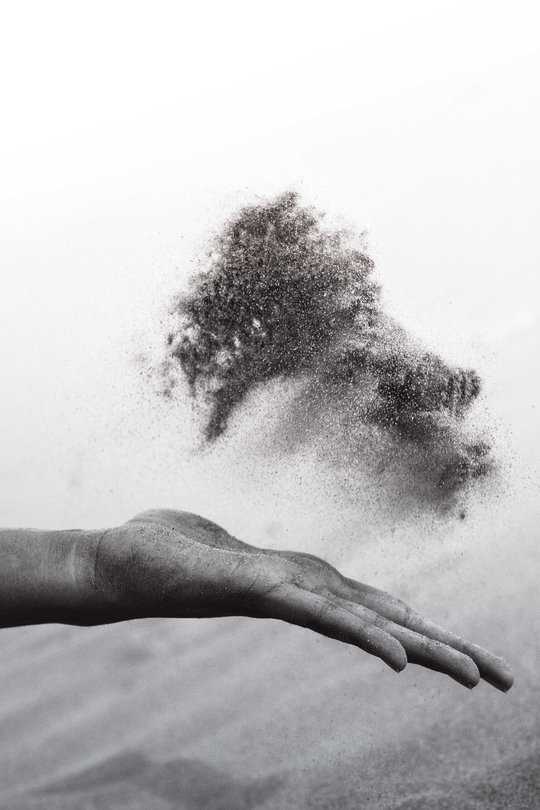
What Specialist Solids Management Equipment is Needed for High-Pressure Gas Wells?
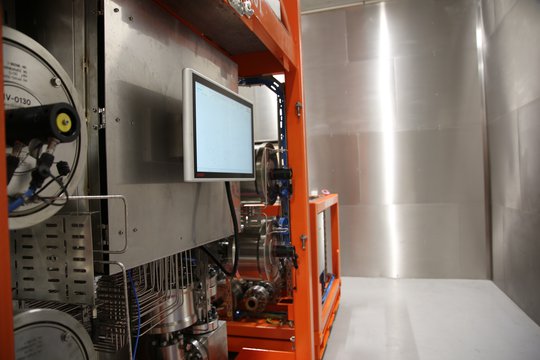
At the heart of our offering is the 5K psi DualFlow cyclonic separation system, purpose-built to handle both intervention and production wells with high-pressure, solids-laden gas streams. Unlike traditional desanders, the DualFlow uses twin cyclonic chambers in one unit to deliver continuous separation, even when flow rates and solids concentrations fluctuate.
For particularly high-rate wells, such as those commonly found off Trinidad and Tobago’s coast, two DualFlow units can be deployed in parallel to handle larger volumes without compromising performance. By offering fully modular systems, a dual deployment strategy allows for an even larger operational window and lowers risk of erosion—which is critical during offshore operations.
What further sets DualFlow apart is its real-time solids measurement capability either onsite or remotely monitored. Operators gain continuous visibility into solids production, enabling proactive production adjustments to improve separation efficiency and/or find the sand/hydrocarbon production balance to optimise production.
The DualFlow system boasts a compact 2×2-meter footprint, making it one of the smallest and most versatile desanders on the market. This is especially important on space-constrained offshore rigs, where every square meter counts[3].
For particularly high-rate wells, such as those commonly found off Trinidad and Tobago’s coast, two DualFlow units can be deployed in parallel to handle larger volumes without compromising performance. By offering fully modular systems, a dual deployment strategy allows for an even larger operational window and lowers risk of erosion—which is critical during offshore operations.
What further sets DualFlow apart is its real-time solids measurement capability either onsite or remotely monitored. Operators gain continuous visibility into solids production, enabling proactive production adjustments to improve separation efficiency and/or find the sand/hydrocarbon production balance to optimise production.
The DualFlow system boasts a compact 2×2-meter footprint, making it one of the smallest and most versatile desanders on the market. This is especially important on space-constrained offshore rigs, where every square meter counts[3].
How is the Dualflow Deployed in the Trinidad and Tobago Region?
FourPhase’s DualFlow units are built to comply with DNV, US UL (Underwriters Laboratories) and ASME (American Society of Mechanical Engineers) standards. This means it is certified to meet the rigorous requirements of offshore operators in both safety and quality[4] independent of market. This gives operators the confidence that they’re deploying the best-in-class technology, specifically designed to withstand the harshest conditions.
A recent deployment in the Gulf of Mexico saw us help a major operator revive a shut-in well plagued by solids. With the help of DualFlow, the operator increased production by 6,000 barrels of oil equivalent per day and recovered over US$30 million in lost revenue, while cutting personnel on board (POB) from 20 to just 6, thanks to our automated operations[5].
A recent deployment in the Gulf of Mexico saw us help a major operator revive a shut-in well plagued by solids. With the help of DualFlow, the operator increased production by 6,000 barrels of oil equivalent per day and recovered over US$30 million in lost revenue, while cutting personnel on board (POB) from 20 to just 6, thanks to our automated operations[5].
How Can You Maximise Output to Support the Future of Trinidad and Tobago’s Offshore Sector?
As Trinidad and Tobago continues to expand its offshore gas development, the ability to manage solids efficiently and safely will remain essential. Whether supporting short-term interventions or long-term production, FourPhase is uniquely positioned to meet this challenge.
With field-proven technology, a strong operational track record, and a relentless focus on innovation, we enable operators in Trinidad and Tobago to maximise output while minimising risk. In a region whose production matters on a global scale, that capability makes all the difference.
With field-proven technology, a strong operational track record, and a relentless focus on innovation, we enable operators in Trinidad and Tobago to maximise output while minimising risk. In a region whose production matters on a global scale, that capability makes all the difference.
NOTES:
[1] Ministry of Energy and Energy Industries, Trinidad & Tobago. (2023). Natural Gas Reserves Summary.
[2] McKinsey & Company. (2020). Reducing Offshore Downtime: Why it matters now more than ever.
[3] FourPhase. (2024). DualFlow System Design and Footprint Specifications.
[4] Underwriters Laboratories (UL) & ASME. (2023). Certifications for Offshore Equipment Standards.
[5] FourPhase Case Study. (2024). Gulf of Mexico Solids Management Success with DualFlow 5K.
[1] Ministry of Energy and Energy Industries, Trinidad & Tobago. (2023). Natural Gas Reserves Summary.
[2] McKinsey & Company. (2020). Reducing Offshore Downtime: Why it matters now more than ever.
[3] FourPhase. (2024). DualFlow System Design and Footprint Specifications.
[4] Underwriters Laboratories (UL) & ASME. (2023). Certifications for Offshore Equipment Standards.
[5] FourPhase Case Study. (2024). Gulf of Mexico Solids Management Success with DualFlow 5K.