Duncan Smith: Bringing offshore expertise and sharing his first impressions at FourPhase
- Based on an interview with FourPhase offshore operator Duncan Smith
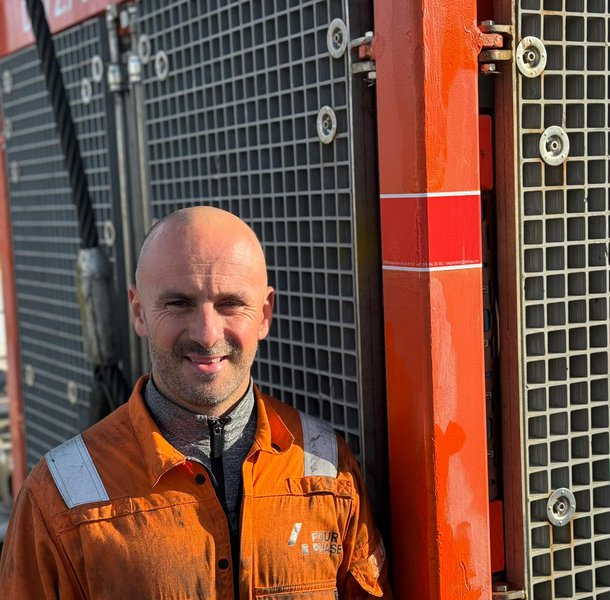
When Duncan Smith joined FourPhase in January, he brought not only nearly two decades of offshore experience but also a perspective shaped by years at some of the industry’s most recognised companies. In this feature, we explore Duncan’s journey, his first impressions of FourPhase, and what his story reveals about the company’s culture, approach to competence, and the value of people in a technology-driven business from Norway.
When Duncan Smith joined FourPhase in January, he brought not only nearly two decades of offshore experience but also a perspective shaped by years at some of the industry’s most recognised companies. In this feature, we explore Duncan’s journey, his first impressions of FourPhase, and what his story reveals about the company’s culture, approach to competence, and the value of people in a technology-driven business from Norway.
From trainee to trusted supervisor
Duncan’s career began in the offshore sector in 2006, starting as a trainee with BJ Services before progressing to a supervisor in the coil tubing department. His path took him through roles at Baker Hughes and Schlumberger, including a stint in Denmark, before returning to Baker Hughes and, ultimately, joining FourPhase at the start of this year.
“I’ve been in the offshore industry for 19 years now,” Duncan reflects. “I started as a trainee and worked my way up to supervisor. I spent 15 years at BJ Services, then moved to SLB in Denmark, where I stayed in coil tubing. After that, I went back to Baker Hughes before joining FourPhase.”
This breadth of experience has given Duncan a unique vantage point on the evolution of offshore operations, the importance of competence, and the subtle but significant differences between working for large corporations and smaller, more agile companies.
“I’ve been in the offshore industry for 19 years now,” Duncan reflects. “I started as a trainee and worked my way up to supervisor. I spent 15 years at BJ Services, then moved to SLB in Denmark, where I stayed in coil tubing. After that, I went back to Baker Hughes before joining FourPhase.”
This breadth of experience has given Duncan a unique vantage point on the evolution of offshore operations, the importance of competence, and the subtle but significant differences between working for large corporations and smaller, more agile companies.
First impressions: A culture of openness
Duncan’s first encounter with FourPhase was several years before joining. As FourPhase often manages returns from CT operations, he had been working alongside the team on jobs in the UK sector and Denmark. “I’d heard of FourPhase six or seven years ago, but didn’t really know what they did. Then I did a few jobs alongside them and got to see the equipment up close. It was something different—innovative products and really interesting.”
What stood out to Duncan was the openness and willingness to share knowledge. “Stuart Much, whom I’d worked with at Baker, showed me through the equipment. It was clear that FourPhase was doing things differently. For example, the way that automation enabled FourPhase to use the same amount of personnel to cover more tasks without increasing the workload”
When the opportunity arose to join FourPhase, Duncan didn’t hesitate. “I’d always been interested in coming across to FourPhase. When the chance came, I took it.”
What stood out to Duncan was the openness and willingness to share knowledge. “Stuart Much, whom I’d worked with at Baker, showed me through the equipment. It was clear that FourPhase was doing things differently. For example, the way that automation enabled FourPhase to use the same amount of personnel to cover more tasks without increasing the workload”
When the opportunity arose to join FourPhase, Duncan didn’t hesitate. “I’d always been interested in coming across to FourPhase. When the chance came, I took it.”
The value of a small team
One of the most striking contrasts Duncan notes is the difference in culture between large corporations and a company like FourPhase. “In a big company, you’re just a number. You might never even know who the big boss is. Here, it’s more intimate. People know who you are, and everyone speaks to you.”This sense of being part of a teamhas tangible benefits for safety, competence, and performance. “. The culture is more relaxed, more approachable. You can pick up the phone or send a message and get help straight away.”
Duncan also highlights the practical advantages: “With a small crew, you rely on each other. If your pair doesn’t help you, you’re both in trouble. There’s a real sense of ownership and responsibility from everyone involved.”
Duncan also highlights the practical advantages: “With a small crew, you rely on each other. If your pair doesn’t help you, you’re both in trouble. There’s a real sense of ownership and responsibility from everyone involved.”
Competence development: A pragmatic approach
FourPhase’s approach to training and competence development is, in Duncan’s view, refreshingly pragmatic. “The onboarding was about the equipment and how things work. The training is simplified, but not in a bad way. It’s focused on what you actually need to know to deliver uptime offshore.”
He notes that while this year has been quieter than expected, FourPhase has invested in both internal and external training, including refresher courses. “It’s not just sitting around waiting for the phone to ring. Right now, I am helping in the workshop in Norway, which is also an effective way to connect with the team over there. I’ve been attending external courses, some are refreshers, but it’s always valuable and better to do when the workload is lower.”
Duncan also appreciates the transparency around company updates and operations. “At big companies, you’d hear rumours if things went quiet. Here, you get told what’s happening. The weekly updates are good—you know what’s coming up and what’s happened week by week.”
He notes that while this year has been quieter than expected, FourPhase has invested in both internal and external training, including refresher courses. “It’s not just sitting around waiting for the phone to ring. Right now, I am helping in the workshop in Norway, which is also an effective way to connect with the team over there. I’ve been attending external courses, some are refreshers, but it’s always valuable and better to do when the workload is lower.”
Duncan also appreciates the transparency around company updates and operations. “At big companies, you’d hear rumours if things went quiet. Here, you get told what’s happening. The weekly updates are good—you know what’s coming up and what’s happened week by week.”
Linking competence to performance
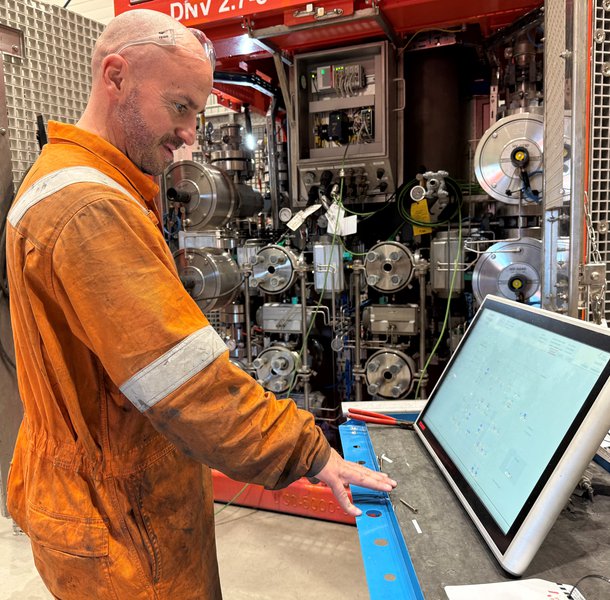
For FourPhase, high uptime and operational reliability are points of pride. Duncan sees a clear link between competence and performance. “If you have good training and everyone has a certain level of competence, it helps with uptime. The machinery here is more technical, but with fewer moving parts than coil tubing. You know exactly which parts need to be maintained, and there aren’t as many of them.”
He also points out the value of mixing experience levels within crews. “It’s always good to have a bit of experience in the team. Someone might have seen something before and can help solve a problem. Most of the guys in Aberdeen have 4-5 years’ experience; some have eight or nine years with the company (average of 19 years within the industry). Mixing crews helps everyone learn.”
He also points out the value of mixing experience levels within crews. “It’s always good to have a bit of experience in the team. Someone might have seen something before and can help solve a problem. Most of the guys in Aberdeen have 4-5 years’ experience; some have eight or nine years with the company (average of 19 years within the industry). Mixing crews helps everyone learn.”
Collaboration and communication
Duncan’s experience with onshore-offshore collaboration at FourPhase has been positive. “Every job I’ve done, there’s been a Teams meeting or a WhatsApp group set up. If someone has an issue, you can get help straight away. It’s a small company, so people are available and take pride in what they do.”
He contrasts this with previous roles, where communication could be more fragmented. “In previous roles, especially abroad, you were often left to your own devices. Here, there’s more support.”
He contrasts this with previous roles, where communication could be more fragmented. “In previous roles, especially abroad, you were often left to your own devices. Here, there’s more support.”
Motivation and career progression
When asked what motivates him, Duncan is clear: “I enjoy being away, travelling, seeing different things, and working with different people. I’ve thought about moving into an office job eventually, but for now, I enjoy being offshore.”
He values the variety and the opportunity to keep learning. “Every job is different. You meet a lot of people and get different perspectives. It keeps things interesting.”
He values the variety and the opportunity to keep learning. “Every job is different. You meet a lot of people and get different perspectives. It keeps things interesting.”
The human element
Duncan’s story is a reminder that even in a technology-driven business, it’s the people who make the difference. His journey reflects FourPhase’s commitment to competence, openness, and continuous improvement—a culture where experience is valued, learning is ongoing, and everyone has a voice.
For FourPhase, bringing in experienced professionals like Duncan Smith is not just about filling a role—it’s about strengthening the team, enhancing capability, and ensuring that as the company grows, it remains true to its values: innovation, safety, and the human touch.
Liv Marit Skomsvold, FourPhase HR Manager, adds:
“We prioritise competence development and actively involve our employees to ensure they become well acquainted with our equipment and operations offshore. To perform effectively, it is essential to have insight into the tasks to be conducted. In addition, we aim to strengthen the connection between offshore personnel and the organisation as a whole, fostering a sense of belonging and shared purpose.”
For FourPhase, bringing in experienced professionals like Duncan Smith is not just about filling a role—it’s about strengthening the team, enhancing capability, and ensuring that as the company grows, it remains true to its values: innovation, safety, and the human touch.
Liv Marit Skomsvold, FourPhase HR Manager, adds:
“We prioritise competence development and actively involve our employees to ensure they become well acquainted with our equipment and operations offshore. To perform effectively, it is essential to have insight into the tasks to be conducted. In addition, we aim to strengthen the connection between offshore personnel and the organisation as a whole, fostering a sense of belonging and shared purpose.”
Get in touch