

Digitally Transforming Sand Management: Making Data Available Anytime, Anywhere
Offshore oil and gas producers continue to find new ways of leveraging digitalisation and connectivity to lower costs, improve efficiency, and extend the life of their aging fields. Real-time condition monitoring and data-driven optimisation are now the standard in numerous production-related processes. In other areas, like sand management, much of the industry continues to rely on labour-intensive legacy workflows, which is hindering efforts toward autonomous platforms and the adoption of low-manning concepts.
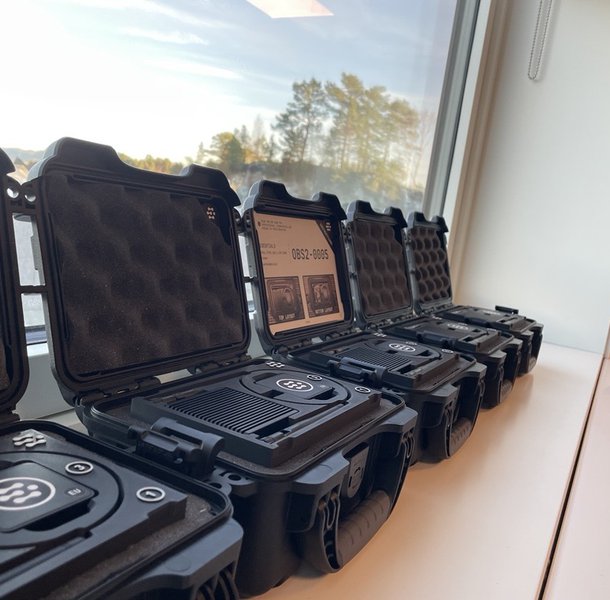
FourPhase has made significant progress in recent years to address this gap by investing heavily in technology that enables remote monitoring of our complete fleet of systems including desanders, a system we call “Observer™”.
With Observer, real-time data from our desanders is used to create a replica display in FourPhase operations centers. We then use this data to create online dashboards that are accessible to our customers from anywhere in the world. Even in locations where the internet is not available, all operations data from the desander is recorded and “time stamped” so that it can be uploaded if/when a connection is installed.
Coupled with onsite remote operation, these capabilities are enabling a step-change improvement in offshore sand management, opening new opportunities for production optimisation and autonomy and that have previously not been possible.
FourPhase has made significant progress in recent years to address this gap by investing heavily in technology that enables remote monitoring of our complete fleet of systems including desanders, a system we call “Observer™”.
With Observer, real-time data from our desanders is used to create a replica display in FourPhase operations centers. We then use this data to create online dashboards that are accessible to our customers from anywhere in the world. Even in locations where the internet is not available, all operations data from the desander is recorded and “time stamped” so that it can be uploaded if/when a connection is installed.
Coupled with onsite remote operation, these capabilities are enabling a step-change improvement in offshore sand management, opening new opportunities for production optimisation and autonomy and that have previously not been possible.
Advantages of remote monitoring
Ability to continuously optimise production - Excessive sand production is a significant issue in many oil & gas fields across the globe. Proper mitigation is crucial to ensuring high production rates and well integrity, as well as preventing unnecessary downtime of processing equipment.
As an example, wells are often taken offline when they start producing sand. Operators have traditionally installed acoustic
sand detectors so that they know when this occurs. However, the detectors act in binary fashion and thus provide little to
no information about sand production rates. Often, the only indication is a full separator, which can result in the need for
production to be curtailed or stopped until the sand can be offloaded.
With continuous measurement of sand, acoustic detectors can be calibrated in real production scenarios, allowing operators to continuously optimise production by correlating key variables with the weight of solids removed, flow rate, pressure, temperature and asset integrity of the desander system.
FourPhase makes data sharing simple and easy. Through our Power BI dashboards, it is possible for clients to receive fully automated reports whenever they need them, ensuring that they can stay up to date on the condition of the well.
Adoption of condition-based maintenance (CBM) – By making data available for analysis and interpretation, operators can transition away from reactive maintenance strategies toward CBM. Underlying trends and anomalies in the data can be detected to identify potential issues with the desander, allowing personnel to conduct service and repairs proactively to maintain high uptime.
FourPhase has been capturing solids management information since 2013. By utilising our database and simulating operational scenarios, we have delivered uptime above 99.6% over the last 10 years. The database allows us to plan new operations by utilising data from real-world field experience as opposed to theoretical values based solely on calculations.
Improved safety – Remote monitoring supports onsite remote operation of the desander and even autonomous operation under certain scenarios. FourPhase has delivered fully autonomous systems for unmanned installations. These systems do not require personnel other than for bagging solids and can operate independent of human interaction.
On larger production platforms, onsite remote operation from a safe distance removes the need for people working in hazardous zones. Instead of manually transferring sand from the production separator vessel to skips, FourPhase automated desanders can flush both to skips or closed tanks to avoid any emissions.
Lower POB & OPEX – With our latest control system we have lowered OPEX by automating sequences, reducing manual labour, and enabling our personnel to operate systems (e.g., DualFlow desander, Choke, MPFM, SSV, etc.) from a single workstation.
Additionally, with the ability to manage more units remotely at a given time, project managers can be based onshore and monitor several different wells and operations simultaneously. They can also share lessons learned and experience from other campaigns to continuously drive down costs and improve efficiency across multiple locations.
As an example, wells are often taken offline when they start producing sand. Operators have traditionally installed acoustic
sand detectors so that they know when this occurs. However, the detectors act in binary fashion and thus provide little to
no information about sand production rates. Often, the only indication is a full separator, which can result in the need for
production to be curtailed or stopped until the sand can be offloaded.
With continuous measurement of sand, acoustic detectors can be calibrated in real production scenarios, allowing operators to continuously optimise production by correlating key variables with the weight of solids removed, flow rate, pressure, temperature and asset integrity of the desander system.
FourPhase makes data sharing simple and easy. Through our Power BI dashboards, it is possible for clients to receive fully automated reports whenever they need them, ensuring that they can stay up to date on the condition of the well.
Adoption of condition-based maintenance (CBM) – By making data available for analysis and interpretation, operators can transition away from reactive maintenance strategies toward CBM. Underlying trends and anomalies in the data can be detected to identify potential issues with the desander, allowing personnel to conduct service and repairs proactively to maintain high uptime.
FourPhase has been capturing solids management information since 2013. By utilising our database and simulating operational scenarios, we have delivered uptime above 99.6% over the last 10 years. The database allows us to plan new operations by utilising data from real-world field experience as opposed to theoretical values based solely on calculations.
Improved safety – Remote monitoring supports onsite remote operation of the desander and even autonomous operation under certain scenarios. FourPhase has delivered fully autonomous systems for unmanned installations. These systems do not require personnel other than for bagging solids and can operate independent of human interaction.
On larger production platforms, onsite remote operation from a safe distance removes the need for people working in hazardous zones. Instead of manually transferring sand from the production separator vessel to skips, FourPhase automated desanders can flush both to skips or closed tanks to avoid any emissions.
Lower POB & OPEX – With our latest control system we have lowered OPEX by automating sequences, reducing manual labour, and enabling our personnel to operate systems (e.g., DualFlow desander, Choke, MPFM, SSV, etc.) from a single workstation.
Additionally, with the ability to manage more units remotely at a given time, project managers can be based onshore and monitor several different wells and operations simultaneously. They can also share lessons learned and experience from other campaigns to continuously drive down costs and improve efficiency across multiple locations.
A step towards full autonomy
Unassisted remote operations (with no personnel present at the asset) represents the next step on the digitalisation journey. FourPhase can develop these systems on demand. However, it does require the installation of additional sensory and mechanical redundancies, such as shut-off valves and relief systems. Initial field deployments of remotely controlled desanders are expected to take place in 2026. With POB being a constraint, we are investing heavily in enabling remote operation. It will be a great enabler for our customer and the energy industry.